



The Slide-On Silhouette That Rewrote Casual Footwear
The clog had a long run. For the better part of a decade, the chunky, closed-toe silhouette – led by Dansko in medical settings and Crocs in every other setting – held its position as the default shoe for people who wanted comfort without the commitment of lacing up. Then the Birkenstock Boston arrived in wardrobes outside its traditional German-health-shoe audience, and the calculus quietly started shifting. Not through a campaign or a celebrity endorsement deal, but through the same slow accumulation of sightings that precedes every genuine style migration.
The Boston is technically a mule – a closed toe, open heel, with the brand’s signature contoured cork footbed. It has been in production for decades. But its current cultural moment is something different from its past utility-wear reputation. Stylists are pairing it with tailored trousers. Street style photographers are catching it under wide-leg denim. It is appearing in contexts where, two years ago, a sleek leather clog would have been the obvious choice. The displacement is not loud. It rarely is when one shoe archetype replaces another.

Why the Boston Works Where the Clog Stumbled
The clog’s core problem was always proportional. Its boxy toe box and elevated wooden or synthetic sole created a silhouette that demanded a very specific pant length and leg line to read as intentional rather than accidental. Worn wrong, it looked like a footwear mistake. The Boston, by contrast, carries enough visual lightness in its strapping and cork base that it reads as deliberate across a wider range of outfits. The toe shape is rounded but not bulbous, and the heel’s openness adds a casualness that the enclosed clog can never quite achieve.
There is also the question of tactile experience. Cork footbeds mold over time to the specific contours of the wearer’s foot – a feature that has built something close to a loyalty cult around the brand. A well-worn Boston fits differently from a new one, and that personalization is a selling point no mass-produced clog has been able to replicate. The shoe becomes more yours the longer you own it, which creates a relationship with footwear that fast fashion simply cannot manufacture.
Color strategy has helped the Boston’s case considerably. Birkenstock has expanded beyond its original tan suede and black oiled leather into shades – mink, stone, dark navy, forest green – that slot into the neutral-heavy palettes that currently dominate casual dressing. The clog’s palette, by comparison, has remained relatively static. Clogs tend to lean into wood grain finishes or primary colors, neither of which maps cleanly onto the earthy, desaturated aesthetic that has taken hold across women’s and men’s casual wear alike.
Seasonality is another factor working in the Boston’s favor. Unlike open sandals, the Boston’s closed toe makes it viable from early spring through late autumn, and with the right sock weight, some wearers push it into mild winter. The clog covers a similar seasonal range, but its heavier construction makes it feel more deliberate – more of a statement. The Boston reads as effortless regardless of context, which is precisely the quality that modern casual dressing rewards most.
Who Is Actually Wearing It
The Boston’s current demographic is broader than its heritage suggests. It was long coded as a shoe for naturopaths, art teachers, and people who attended liberal arts colleges in the 1990s. That association has not disappeared – it has simply been joined by others. A growing number of fashion-adjacent consumers who would never have identified as Birkenstock customers are now reaching for the Boston as their default off-duty shoe. The shift is visible across age groups, and notably, it is crossing the gender line more fluidly than the clog ever managed. Men who previously wore minimalist sneakers as their casual staple are adopting the Boston without much ideological conflict.
The brand’s 2023 IPO and its subsequent mainstream visibility gave the Boston a fresh coat of cultural legitimacy without actually changing the shoe. Birkenstock did not redesign the silhouette to chase trend cycles – it simply became visible to a new audience that had not been paying attention before. That kind of adoption, where the product stays fixed and the consumer moves toward it, tends to be more durable than trend-driven spikes.
The Styling Logic That Makes It Stick
Part of what has extended the Boston’s reach is how little styling effort it requires. Pair it with cropped straight-leg jeans and a linen shirt and the outfit looks considered. Wear it with a midi skirt and a fitted knit and the proportions work without adjustment. The shoe does not impose demands on the rest of the look – it absorbs whatever context it is placed in. Clogs, particularly heeled ones, have always required more deliberate coordination to avoid looking costume-like.
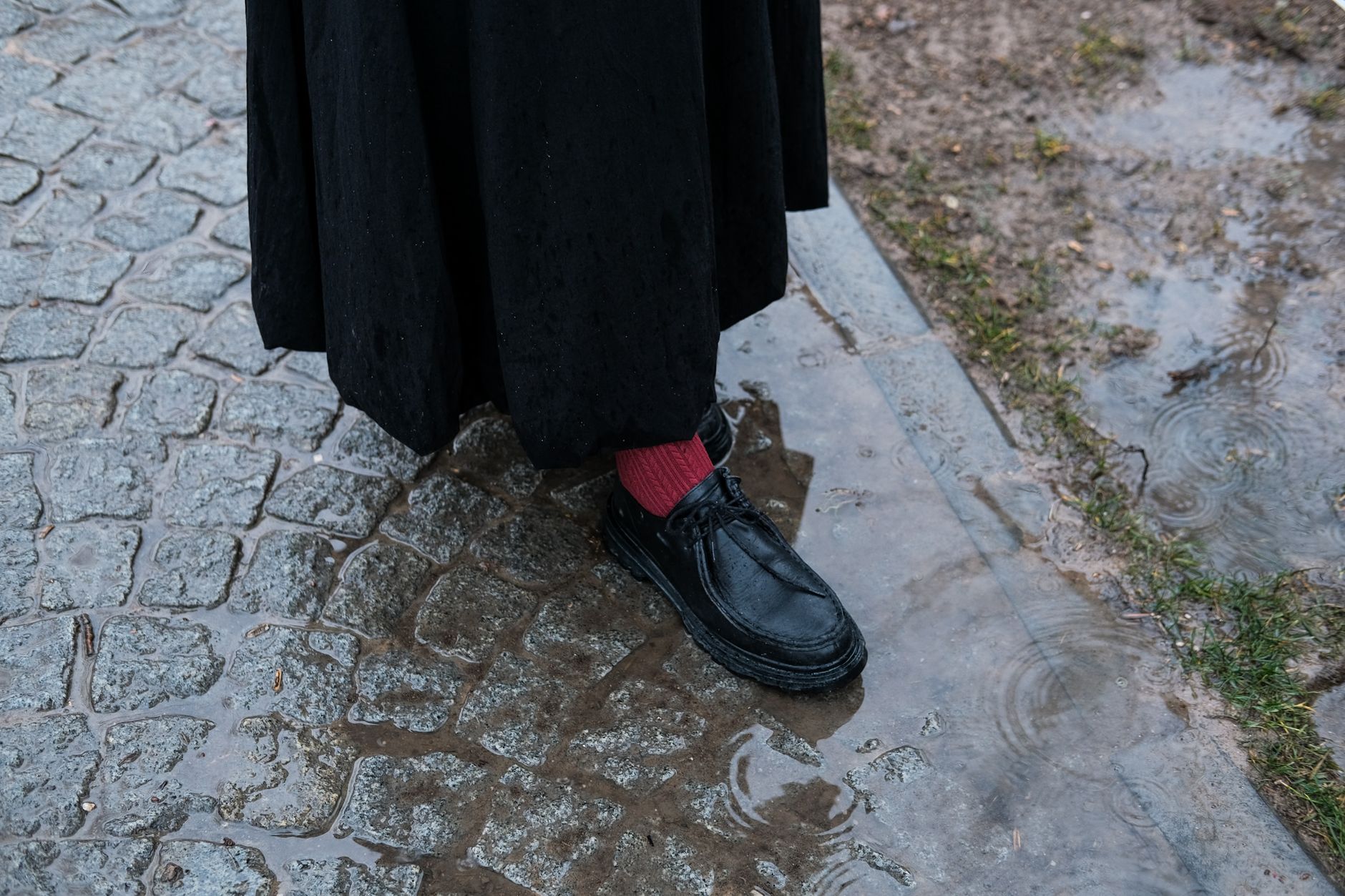
The sock question has also resolved itself in the Boston’s favor. Wearing sandals or mules with socks was once the exclusive territory of tourists and irony-forward dressers. That barrier is effectively gone. Sheer ankle socks, ribbed cotton socks, even chunky wool socks in winter – all of them pair visually with the Boston without tension. This makes the shoe functional across a temperature range where bare feet or thin soles would otherwise force a shoe change entirely.
This is also where the Boston connects to a broader footwear appetite for shoes that occupy the middle space between athletic and formal. The chunky sneaker filled that role for several years and is now showing signs of fatigue. The loafer stepped in as a sleeker alternative – and the loafer itself is facing pressure from newer silhouettes. The Boston’s appeal lives in the same zone: casual enough for weekends, structured enough for a lunch meeting, and specific enough in its design to register as a choice rather than a default.
The Clog Is Not Gone
None of this means clogs have disappeared. Certain versions – the wooden-soled Swedish clog in particular – retain a devoted following and carry enough heritage weight to remain relevant on their own terms. The category that is losing ground is the fashion clog: the seasonal, trend-positioned version that brands roll out when platform silhouettes are running hot. That shoe has lost its footing, and the Boston is occupying the space it left behind. The transition is most visible at the point-of-sale level, where multi-brand retailers that once devoted significant floor space to clog styles are now stocking Boston colorways across multiple display positions.
Birkenstock has not made a single major design change to the Boston to achieve any of this. The contoured footbed is the same one the brand has used for decades. The upper construction has not been modernized. What changed is that comfort-forward dressing stopped being a concession and became a preference – and the Boston was already built for exactly that moment.